

Belt Conveyor
Capacity: 10-350 TPH
Feeding: <800mm
Material all kinds of ore, waste, tailings, steel slag.
Products display
Overview
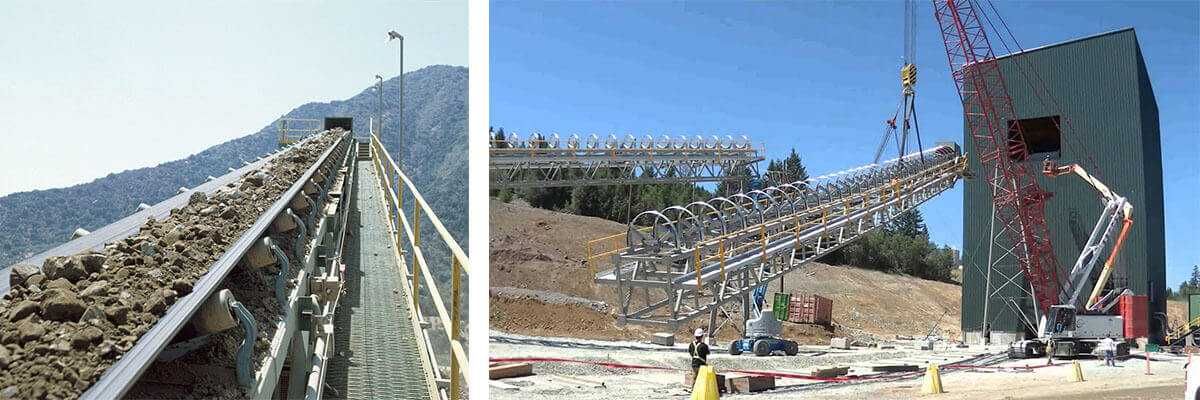
We’re providing belt conveyors mainly for mining applications. Our belt conveyor can seamlessly integrate with crushing processing, receive and handle material from the production line.
JXSC belt conveyors are specifically designed to handle and move mediums in mineral processes, such as material inside a factory.
And bulk material handling such as transport large volumes of resources and processed ores, such as gravel, sand, coal, ore, alluvial, overburden and more.
https://www.youtube.com/watch?v=Ncteyh4IBb0
The vibrating screen feeder is mainly used in the following situations:
(1) It can be continuously fed before coarse crushing and screening to separate fine particles and improve crushing capacity.
(2) During the operation, the materials are fed into the feeding device evenly, regularly and continuously.
(3) Can be used for coarse sieve of materials. Double screen feeder can be used to remove mud and other small impurities in the material.
We tailor a variety of light, medium and heavy duty vibrating feeders to meet your requirement of controling the material flow. Call now to learn how we can increase your productivity and profits.
specifications
Parameter Structure Main parts Parameter
Structure
Main parts
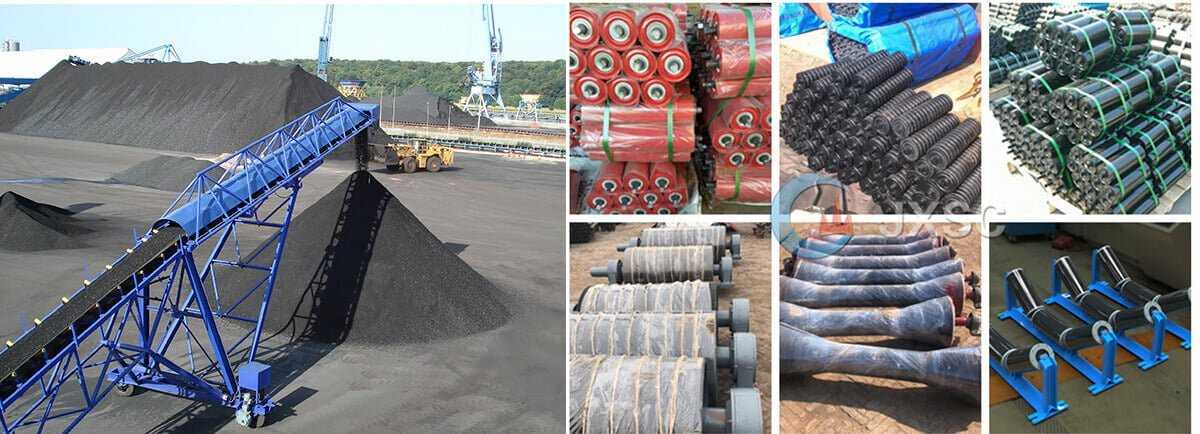
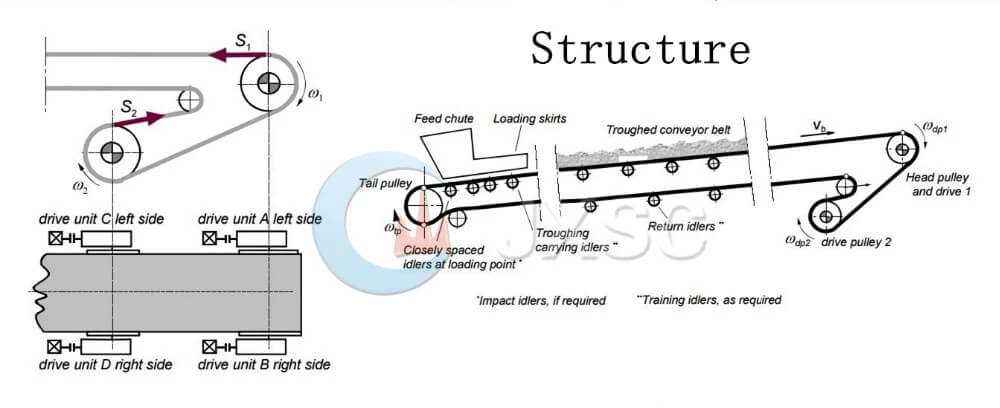
Our JXSC’s troughed belt conveyor consists of a wide belt typically running on three idler rolls. The outer wing rollers are sloped upwards to form the trough shape. The troughed belt then travels over the idler sets to transport the load. A conventional troughed belt conveyor has the following components:
- Idlers These are rollers with bearings that form a trough shape for the belting. The idler sets are typically spaced out between one and three meters.
- Belting The belting, which carries the load, rests on the idler rollers. Our conveyor products the typical arrangement of the idlers supporting the belt. The belt is pulled around in a loop with tension/power supplied by drive pulley(s).
- Drive The pulleys and drives are used to move the belt.
- Pulleys The conveyor belt forms a loop. The carry side transports the load and the return side allows continuous cycling of the belt. The pulleys allow the belt to change direction at the loading and discharge ends, as well as direction changes on the return side.
- Transfer Chute This is where the material is loaded onto or discharged from the belt.
- Conveyor take-up system The take-up applies tension to the belt to limit the sag between the idlers and prevent slip at the drive pulley. The take-up pulley moves to tension the belt. Take-up systems are typically gravity, but can be winch, screw or hydraulic jack. The typical arrangement has a pulley mounted on a trolley. The trolley is connected to a gravity mass in a tower via a cable.


