Are you looking to shop for manganese ore crushers but struggling to decide on equipment that is both efficient and durable? As a critical raw material in industrial sectors such as steel smelting and new energy batteries, the processing efficiency of manganese ore directly impacts a company’s production costs and competitiveness. Furthermore, given that crushing constitutes the initial stage of manganese ore processing, the selection of the appropriate equipment is of paramount importance.
However, when confronted with the vast array of options available on the market—including jaw crushers, cone crushers, impact crushers, and various other models—many buyers often find themselves in a quandary. This article provides a systematic analysis of various types of ore crushers and the key factors to consider during procurement, helping you select a manganese ore processing solution that truly meets your specific needs.

Types of manganese ore crushers include jaw crushers, cone crushers, impact crushers, hammer crushers, roller crushers, etc. To acquire cost-effective equipment, specific configuration plans must prioritize key factors such as ore characteristics, production capacity requirements, energy consumption and environmental protection metrics, the selection of wear-resistant components, and the quality of manufacturer services.
Key Types Of Manganese Ore Crushers
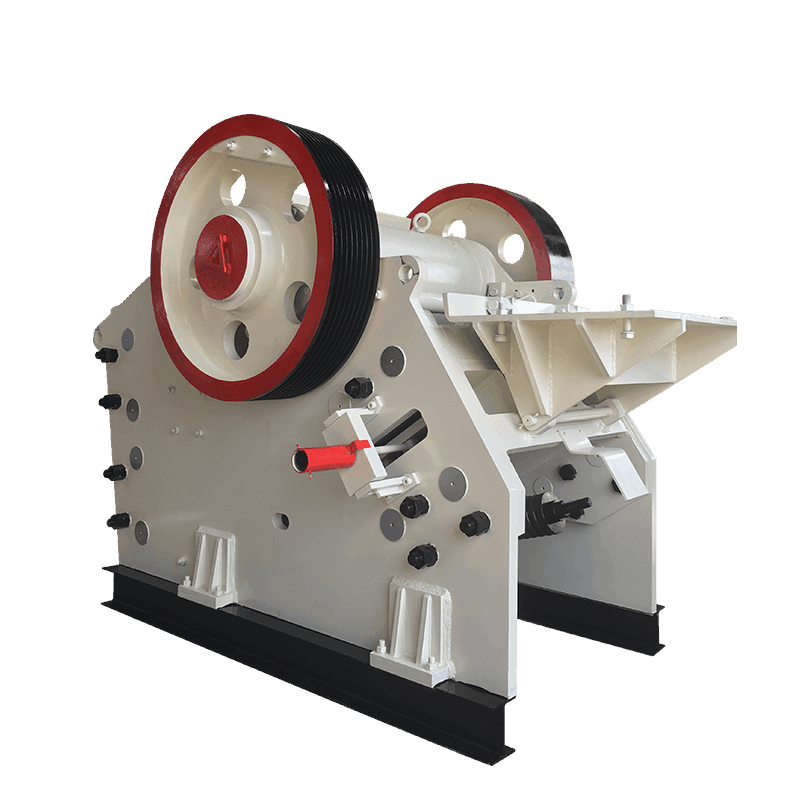
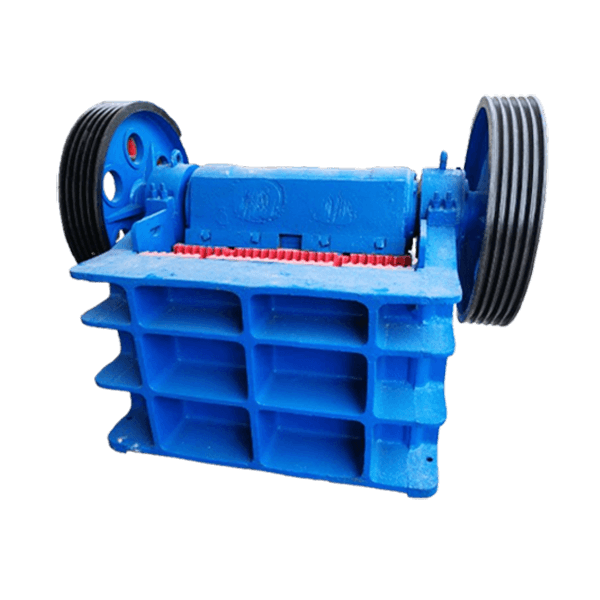
(1) Manganese Ore Jaw Crusher:
With its simple yet reliable structure and powerful crushing force, the jaw crusher stands as the preferred equipment for the primary crushing of manganese ore. Its operating principle resembles the “chewing action of an animal,” utilizing the compressive force between a moving jaw and a stationary jaw to break down large blocks of ore into smaller particles. Highly adaptable, it is capable of processing manganese ores with high clay content or elevated moisture levels.
Selection Criteria:
The PE series jaw crushers offer a maximum throughput of up to 1,120 tons per hour (TPH); the PEX series fine jaw crusher serves as a fine jaw crusher, handling capacities ranging from 1 to 120 TPH. Depending on specific requirements, these units can be configured to suit the coarse, medium, and fine crushing operations of manganese ore production lines of any scale.
Model selection should primarily be guided by the feed size of the raw ore. For the jaw liners, high-manganese steel reinforced with chromium alloy is the preferred material choice; offering superior wear resistance, it is ideally suited to meet the crushing demands of highly abrasive manganese ores. The equipment features convenient maintenance and a low failure rate.

(2) Manganese Ore Cone Crusher
The cone crusher utilizes the relative motion between a movable cone and a stationary cone to achieve “laminated crushing,” thereby producing particles with a more regular shape. It is capable of further reducing coarse-crushed materials (ranging from 100 to 400 mm) down to a size of 10 to 40 mm, with a production capacity ranging from 27 to 1,450 tons per hour. It is predominantly employed in the medium and fine crushing stages of manganese ore processing lines and is well-suited for crushing high-hardness manganese ores (with a Mohs hardness of ≥6).
Selection Criteria:
The choice of crushing chamber type should be based on the required discharge particle size: the “standard” chamber type is selected for medium-sized output, while the “short-head” chamber type is chosen for fine-sized output.
Cone crushers are available in various configurations, including Symons-style, multi-cylinder hydraulic, and single-cylinder hydraulic models. Priority should be given to models equipped with hydraulic overload protection; this feature enables automatic discharge when uncrushable foreign objects are encountered, thereby preventing severe malfunctions such as main shaft fractures.
Compared to jaw crushers, cone crushers offer 20–30% energy savings for equivalent production capacities; however, they entail higher initial investment costs and are relatively sensitive to manganese ores with high moisture content.


(3) Manganese Ore Impact Crusher:
The impact crusher processes ore by utilizing a high-speed rotating rotor to strike the material, achieving secondary crushing against the impact plates. Its “stone-on-stone” crushing principle minimizes iron contamination to the greatest extent—a critical factor, particularly in the production of battery-grade manganese powder. This equipment is ideally suited for the medium and fine crushing stages of manganese oxide ores with a moderate hardness (Mohs 4–5).
Selection Criteria:
When selecting a model, priority is given to determining the rotor diameter based on the size of the incoming ore. Product specifications can be rapidly adjusted by modifying the rotor speed and the gap between the impact plates; furthermore, the resulting product features an excellent particle shape, with cubic particles accounting for over 90% of the output.
Impact crushers possess robust resistance to impact forces. However, they are not recommended for manganese ores with a compressive strength exceeding 220 MPa or those with a high silica content, as such conditions lead to accelerated wear and tear on the machine’s wear-resistant components.

(4) Manganese Ore Hammer Crusher
The hammer crusher pulverizes ore through the high-speed rotation of its hammerheads; it is highly popular in small-scale manganese mining operations or in scenarios where capital is limited. It is capable of directly crushing raw ore into finished products in a single pass, making it particularly well-suited for the medium-to-fine crushing stages of weathered manganese ores with high clay content. With a production capacity ranging from 1 to 75 tons per hour (TPH), it is frequently deployed in small-scale manganese processing projects. However, due to its limited crushing capacity and impact force, it is unable to crush ores with a hardness level exceeding Grade 5.
Selection Criteria:
Compared to fine cone crushers, the primary advantages of the hammer crusher are its lower cost and ease of installation. When selecting a model, priority should be given to units featuring a dual-rotor structure, as these offer superior crushing efficiency.
Given the relatively short service life of its hammerheads, it is recommended to prioritize models equipped with hammerheads made of high-chromium cast iron inlaid with carbide inserts; these offer a wear resistance and service life that is more than double that of standard high-manganese steel hammerheads.
During operation, hammer crushers tend to generate significant dust pollution; therefore, a dust removal system can be configured as needed to mitigate this issue.

(5) Manganese Ore Double-Roller Crusher:
Double-roller crushers are widely utilized in the ultra-fine crushing or sand-making stages of manganese ore processing. The resulting product features uniform particle size and a low rate of over-crushing, making it ideally suited for the pre-treatment of manganese ore before beneficiation, as well as for the production of manufactured manganese sand. With a throughput capacity ranging from 1 to 70 tons per hour, this equipment is frequently deployed in processing plants handling soft manganese ores that exhibit a flaky structural composition. Furthermore, its enclosed design makes it suitable for applications requiring ultra-fine crushing (yielding an output size of 1–10 mm), such as in the preparation of chemical-grade manganese powder.
Selection Criteria:
Given the complexity typically associated with roller surface repair, priority should be given to models featuring roller surfaces that are either inlaid with wear-resistant alloys or coated with rubber.
In the event of roller surface wear, a complete replacement of the roller is unnecessary; instead, the surface can be restored through hardfacing (overlay welding) to allow for continued use, thereby significantly reducing operation and maintenance costs.


Configurable Your Manganese Ore Crushing Equipment
Typically, a complete manganese ore processing line—in addition to crushers—requires auxiliary machinery such as feeding, screening, and conveying equipment. Specifically, feeders ensure uniform material input, vibrating screens perform classification, and conveyors facilitate material transfer. Subsequently, depending on specific beneficiation requirements, the line can be configured with stages such as gravity separation, flotation, magnetic separation, and other mineral processing equipment to extract valuable metals and produce high-grade concentrates.
5 Key Factors When Shopping Manganese Ore Crushers
| No. | Key Factor | Key Points |
|---|---|---|
| 1 | Ore Characteristics | 1. For high-hardness/corrosive manganese ore: adopt jaw + cone crusher; for medium-large manganese plant. hardness ore: use a hammer/impact crusher to cut costs. 2. Pre-cleaning & screening equipment is required if the ore mud content is>10% to avoid clogging. |
| 2 | Capacity Requirement | 1. Reserve 10%-15% extra capacity for ore property fluctuation, e.g. choose model with ≥120t/h rated capacity for actual 100t/h demand. 2. Configure equipment based on daily operating hours and annual production target. |
| 3 | Energy Consumption & Environmental Protection | 1. Prioritize equipment with a variable frequency drive to reduce energy consumption under low load. 2. Install sealed dust cover + bag dust collector to control dust emission ≤10mg/m³, or choose mobile crushing station with an integrated dust removal system. |
| 4 | Wear Parts Lifespan | 1. Low-cost, high manganese steel liners fit low-hardness manganese ore projects. 2. High chromium alloy liners are more cost-effective for long-term/high-capacity projects. |
| 5 | Brand & After-sales Service | Prioritize manufacturers with rich industry experience, wide service network, fast spare parts supply and stable equipment performance |
Conclusion
For high-hardness ores, we recommend cone crushers; for small- to medium-scale production capacities, jaw crushers or impact crushers are suitable; whereas wet and sticky ores require integration with pre-screening equipment or hammer crushers. The selection of a shop for manganese ore crushers requires a comprehensive assessment of five key factors: ore characteristics (hardness and clay content), production capacity requirements, energy consumption, wear-part service life, and after-sales support. We provide professional evaluations and customized ore crushing solutions designed to help mining enterprises optimize their return on investment.