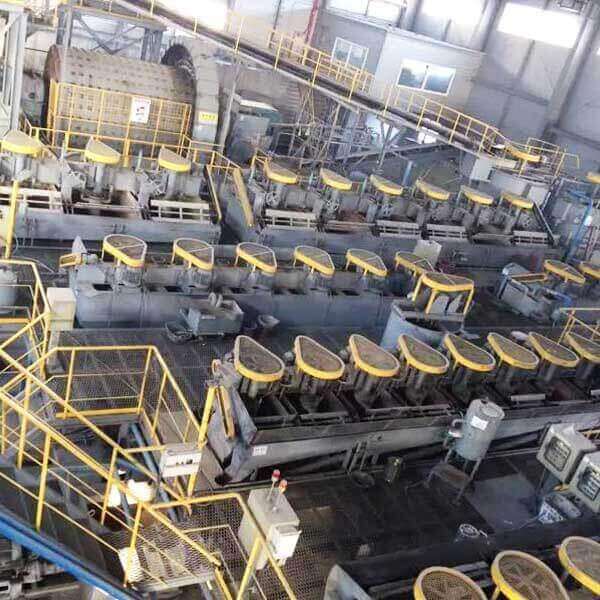
The scheelite flotation process is currently the most mature and cost-effective industrial process for extracting scheelite (CaWO₄) concentrate from tungsten-bearing ores. Characterized by high selectivity and strong adaptability, flotation serves as the mainstream beneficiation method globally for low-grade and complexly disseminated scheelite ores.
Application: This scheelite flotation solution is primarily used to process complex ores, including primary scheelite ores, high-calcium scheelite (associated with fluorite and calcite), high-sulfur scheelite (associated with pyrite and pyrrhotite), fine-grained disseminated scheelite, low-grade scheelite, and mixed tungsten ores (wolframite-scheelite).
Key Advantages:
High recovery rate: Under optimized process conditions, WO₃ recovery can reach 85–90%+.
Wide range: It can process various types of low- to high-grade scheelite ore, and purify fine-grained disseminated scheelite.
High concentrate grade: It effectively separates scheelite from calcium-bearing gangue, with a stable concentrate grade of 65%+.
Flexible expansion: Can be combined with gravity and magnetic separation to maximize overall recovery efficiency.
Scheelite (chemical formula CaWO₄) is an important tungsten mineral with the following key characteristics:
Physical properties: Density of 5.9–6.1 g/cm³, Mohs hardness of 4.5–5, and a brittle nature. It frequently occurs in close association with calcium-bearing minerals such as calcite, fluorite, apatite, and garnet, and is prone to forming slimes. It typically occurs as fine to micro-fine disseminations, requiring fine grinding for liberation.
Chemical properties: It exhibits moderate natural floatability, and its surface reacts readily with fatty acid collectors; however, silicate and carbonate gangue minerals require depression.
Scheelite Flotation Process Methods
Ambient-Temperature Flotation: Involves one roughing stage, multiple scavenging stages, and multiple cleaning stages. It is primarily used for recovering scheelite from simple ores, but is also applicable to the beneficiation of scheelite-quartz vein and scheelite-silicate type ores.
Ambient-Temperature Flotation Combined with Heated Flotation: A mixed concentrate is obtained via ambient-temperature roughing, followed by thickening, dewatering, and subsequent cleaning at an elevated temperature of 80°C. This method is mainly used for complex associated ores of the scheelite-calcite-fluorite type. It is particularly effective at depressing calcium-bearing gangue minerals, resulting in high concentrate grades.
Combined Process: Gravity separation (using jigs, spiral chutes, and shaking tables) +flotation; gravity separation is used to pre-concentrate coarse-grained material, while flotation purifies the fine-grained fraction. This approach is primarily suitable for processing ores containing coarse-grained scheelite and tungsten-bearing polymetallic ores.
The choice of scheelite ( tungsten) flotation solution depends on the ore’s mineral composition, dissemination characteristics, and associated gangue mineral type. The ambient-temperature flotation scheme offers the best economic efficiency; the heated flotation scheme provides the highest separation precision; and the combined gravity-flotation demonstrates superior overall recovery capabilities when processing high-grade, coarse-grained ores.
Scheelite Flotation Process Plant
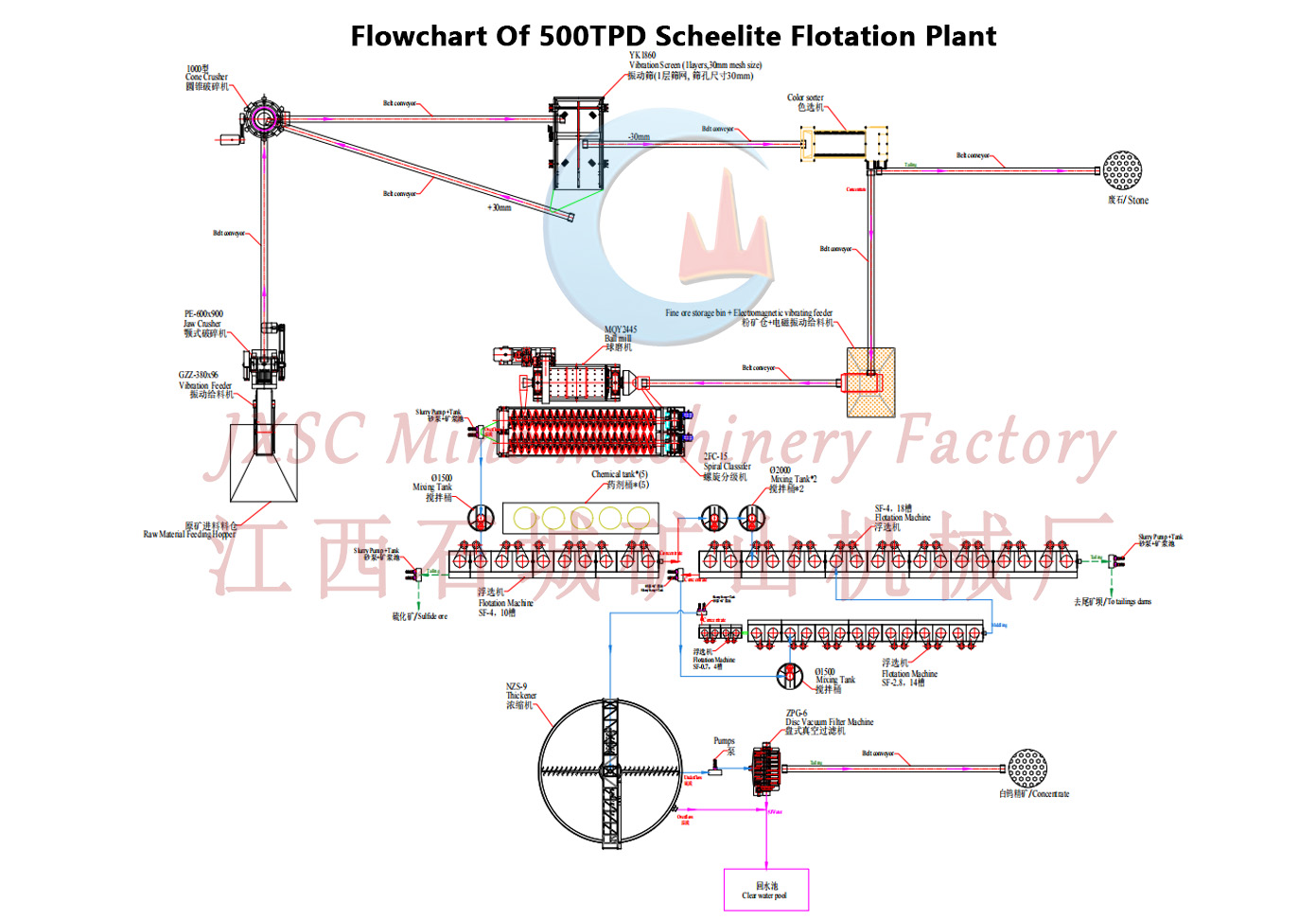
designable scheelite flotation process flow
Solution: Crushing and screening → Grinding and classification → Gravity Pre-concentration (Optional) → Flotation (roughing/cleaning/scavenging) → Concentration and dewatering.
1. Crushing and Screening: Coarse crushing is performed using a jaw crusher, followed by fine crushing with a cone crusher. A vibrating screen classifies the material by particle size; oversized material is returned for re-crushing to ensure a uniform feed size for the grinding stage.
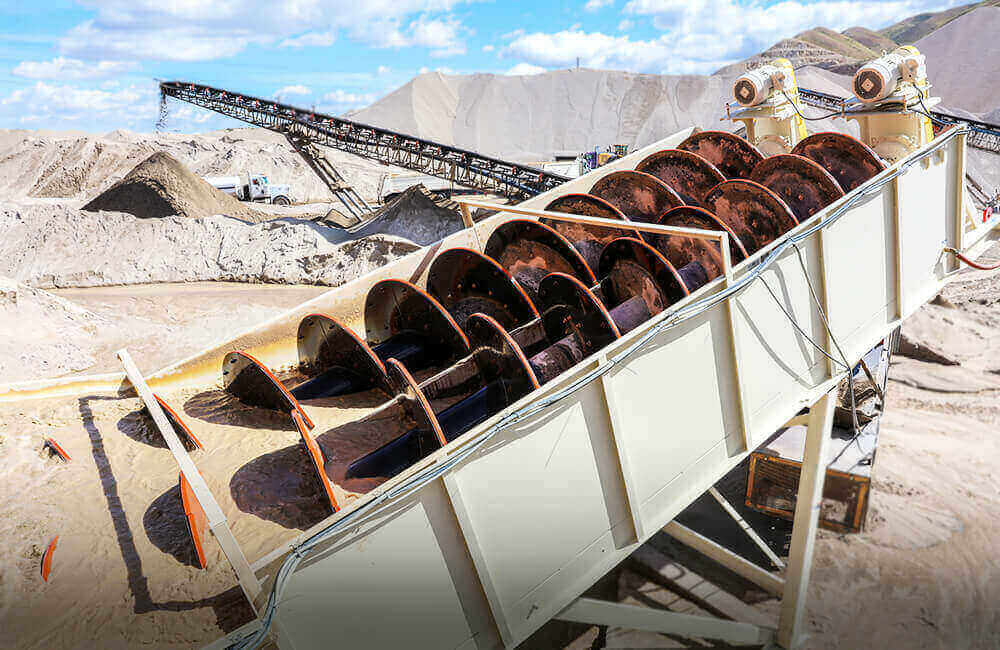
2. Grinding and Classification: Ball mill achieves the liberation of scheelite from gangue minerals, with grinding fineness typically controlled so that 70%–80% of the product passes through a 200-mesh screen. A spiral classifier is used to form a closed-circuit system, ensuring that the slurry meets particle-size specifications.
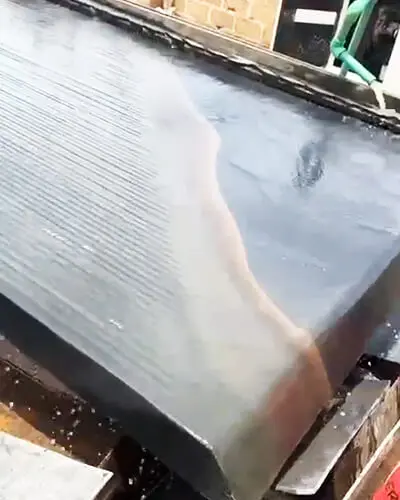
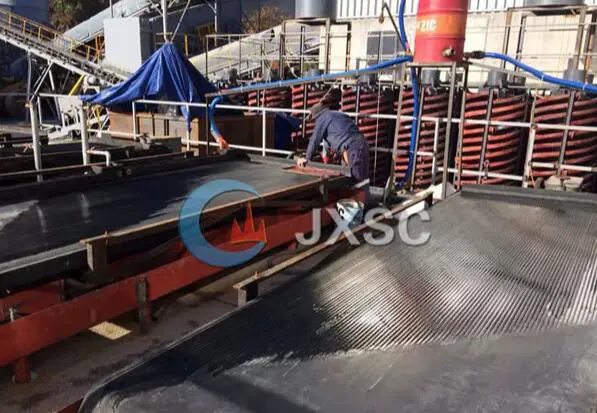
3. Gravity Pre-concentration (Optional): Exploiting the density difference between scheelite and gangue, equipment such as jigs, spiral chutes, and shaking tables is used for pre-concentration. This allows for the early recovery of coarse, liberated scheelite and the rejection of a large volume of lightweight tailings, thereby reducing the load on the subsequent flotation stage.
Desulfurization flotation: Xanthate collectors are used to float off sulfide minerals (such as pyrite) beforehand, eliminating potential interference in subsequent stages.
Roughing: One or two stages of rapid flotation to discard tailings.
Scavenging: Middlings are recovered and recirculated for further processing to lower the tailings grade.
Cleaning: Three to five stages of upgrading to produce a concentrate with a WO₃ content of ≥65%.
5. Thickening and Dewatering: Flotation concentrate slurry enters a high-efficiency thickener for settling and initial dewatering, followed by further dewatering using a dewatering screen or vacuum filter press. This yields a finished scheelite concentrate with a moisture content meeting specifications (<10%), ready for storage or sale.
Maximize your scheelite ore recovery rate and profits
The purpose of the scheelite flotationprocess is to separate scheelite from the raw ore efficiently, remove gangue such as calcite, fluorite, and quartz, enrich it into a high-grade tungsten concentrate that meets smelting requirements, and maximize metal recovery. The full scheelite beneficiation flow comprises crushing, grinding, gravity pre-concentration, flotation purification, and dewatering; it is suitable for skarn-type, low-grade fine-disseminated, and quartz-vein-type scheelite ores.
JXSC provides completetungsten beneficiation solutions: flotation is perfectly suited for scheelite; gravity and magnetic separation processes can be configured as wolframite processing needed. The final concentrate grade can reach over 65%, with a recovery rate of 85%–90%+.
To provide you with design-accurate scheelite solutions quickly, please supply the following information:
WO₃ grade of the raw ore (%).
Types of major gangue minerals (e.g., calcite, fluorite, quartz).
Dissemination size of scheelite (coarse / medium-fine / ultra-fine).
Ask us about mineral processing configuration and equipment quote! (No job, No investment)
Notice:
☑ We only provide mineral processing equipment and beneficiation solutions.
☒ We do not recruit, don’t offer jobs, no rental/ leases, and are not interested in investments or partnerships. Not buy and sell minerals/ ores/ materials.
● We value your privacy and keep your information safe.
Scroll to Top
Contact Us
Please fill in the mineral process solutions & equipment you need!
(No job, No work/Notbuy or sell minerals/ Noinvestment, cooperation)