Wolframite is an iron-manganese tungstate mineral and serves as the primary industrial raw material for tungsten extraction. Mineral processing for wolframite encompasses a comprehensive suite of technologies and equipment solutions designed for beneficiation and purification.
Wolframite Processing Objectives: Through processes such as crushing, grinding, gravity separation, and magnetic separation, low-grade WO₃ in the raw ore is enriched to produce a marketable tungsten concentrate with a grade of 60%+. This provides high-quality feedstock for downstream smelting and the production of tungsten carbide, cemented carbide, and specialty steels.
Key Applications: JXSC’s wolframite beneficiation solutions can be customized for various materials, ranging from coarse particles to fine mud, and from simple tungsten ores to complex polymetallic ores, achieving stable recovery rates of 85%–95%.
Suitable ores: It is not only suitable for processing single wolframite, but also for effectively separating complex ores containing associated minerals such as scheelite (CaWO₄), cassiterite, quartz, and calcite. Including quartz-vein-type wolframite, tungsten-tin-associated ores, tungsten-molybdenum-associated ores, wolframite fines (slimes), and tungsten-manganese iron ore.
Wolframite, with the chemical composition (Fe, Mn)WO₄, typically occurs in high-temperature hydrothermal quartz vein deposits and is commonly associated with minerals such as cassiterite, molybdenite, pyrite, and quartz, etc.
It has a high density (7.2–7.5 g/cm³), creating a significant density contrast with gangue minerals such as quartz, thereby enabling efficient recovery of coarse- to medium-grained tungsten minerals via gravity separation. It exhibits weak magnetic properties—which intensify in iron-rich varieties—and magnetic separation is often employed in conjunction with other methods to enhance concentrate purity.
Wolframite Extraction Process
1. Gravity Separation (Core Process)
Different equipment is used based on particle size classification:
Coarse size (+2 mm) — Jig process: A sawtooth-wave jig is used, employing pulsating water flow to stratify minerals by density. Wolframite as a heavy mineral enters the concentrate, while light minerals like quartz are discharged as tailings. A single stage of jigging can upgrade the material to 8%–15% WO₃, with a coarse-particle recovery rate of 85%–90%.
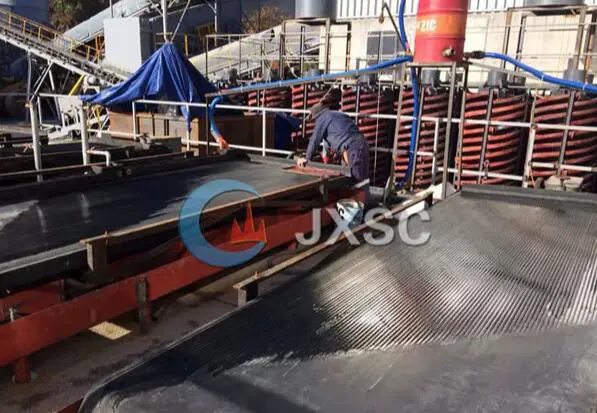
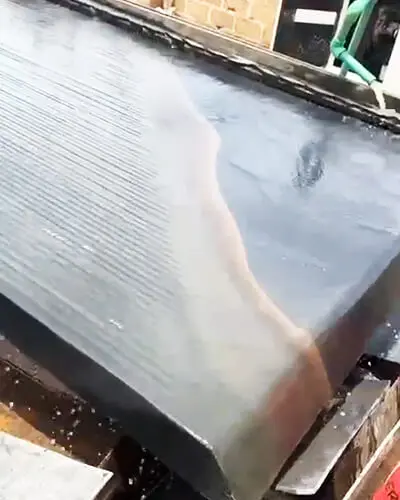
Medium size (0.1–2 mm) — Spiral chute + Shaking table process: Spiral chutes (gravity-fed, requiring no external power) are used for bulk tailings rejection, followed by upgrading of the rough concentrate on 6-S shaking tables. Shaking tables utilize cross-flow water and reciprocating deck motion for precise separation, raising the tungsten grade to 40%–50%.
Fine size (-0.1 mm) — Centrifugal concentrator process: Centrifugal concentrators are used to pretreat fine wolframite slimes; this method effectively processes ultra-fine wolframite and significantly improves recovery rates for the slime fraction.
2. Magnetic Separation (Refining and Purification)
High-gradient magnetic separators or other high-intensity magnetic separators are employed to remove iron- and manganese-bearing impurities (such as garnet and hematite), raising the concentrate grade to over 65% while simultaneously recovering associated valuable minerals.
3. Flotation (Auxiliary Process)
When the proportion of fine slimes is very high or associated minerals are complex, a supplementary flotation stage is added at the end of the beneficiation circuit to remove sulfide minerals or recover fine-grained scheelite.
The wolframite (tungsten) beneficiation solution requires the selection of a “jigging-spiral chute-shaking table” grading and gravity separation system based on the ore’s intercalation particle size. This approach prioritizes rapid recovery of coarse particles and precise extraction of fine particles, supplemented by magnetic separation and flotation when necessary, helping clients achieve the goal of high recovery rates and low operating costs.
Wolframite Processing Plant
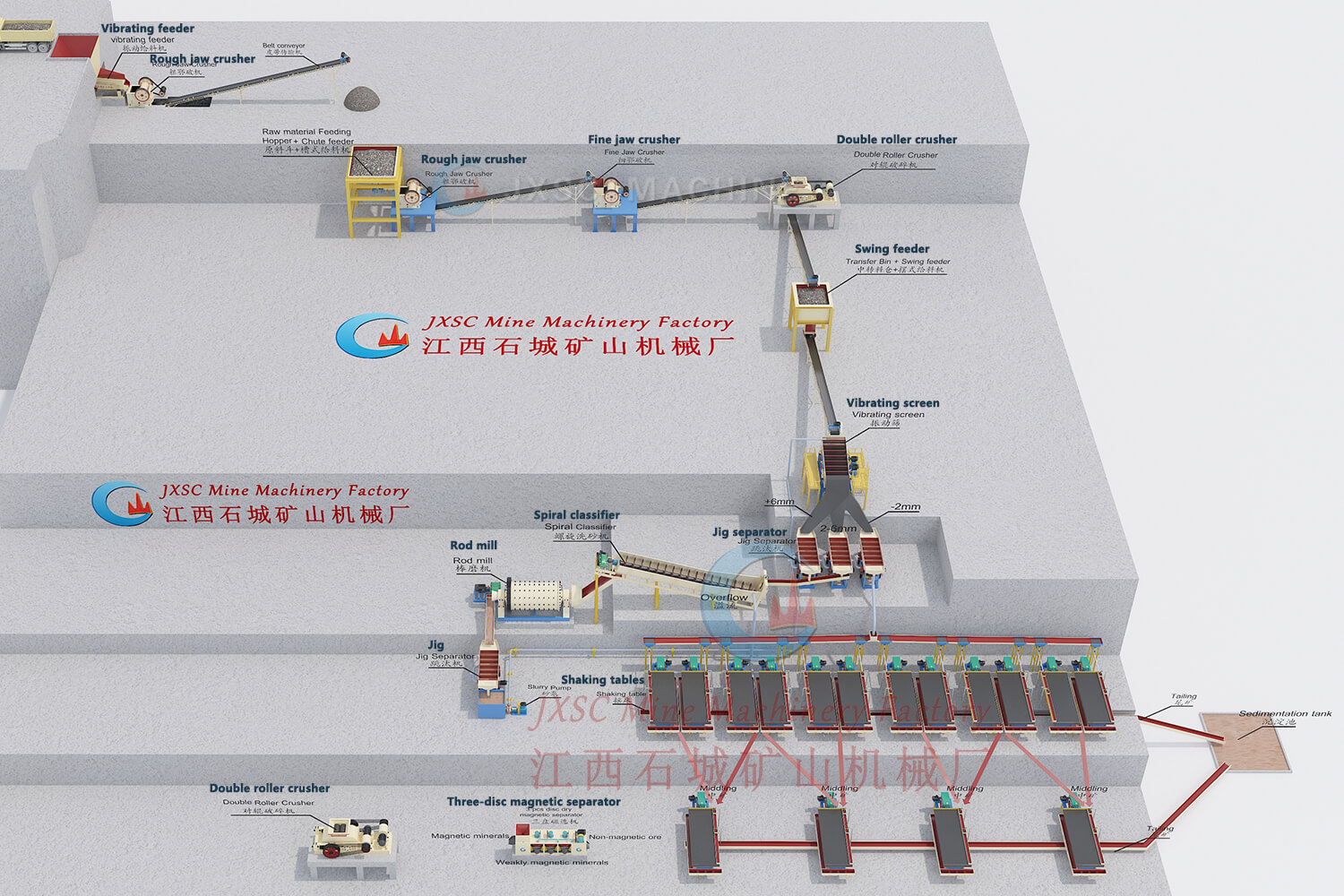
designable Wolframite Processing Flow
10TPH Wolframite Processing Plant:
Crushing & Screening:
Vibrating feeder: Uniformly feeds large chunks of raw ore into a large jaw crusher.
Large jaw crusher: Jaw crushes large chunks of raw ore into smaller stones.
Chute feeder: Feeds smaller stones into the jaw crusher; the material undergoes staged crushing—passing through the jaw crusher, a fine-crushing jaw crusher, and a double-roll crusher—to ultimately produce fine sand.
Vibrating screen: Screens the final fine sand into two size fractions (0–2 mm and 2–6 mm) and feeds them into separate jig machines.
Gravity Separation:
Jig separator: Performs gravity separation on the 0–2 mm and 2–6 mm material fractions to concentrate tungsten ore.
Shaking table: Recovers tungsten from the 0–2 mm tailings produced by the jig machine.
Grinding & Classification:
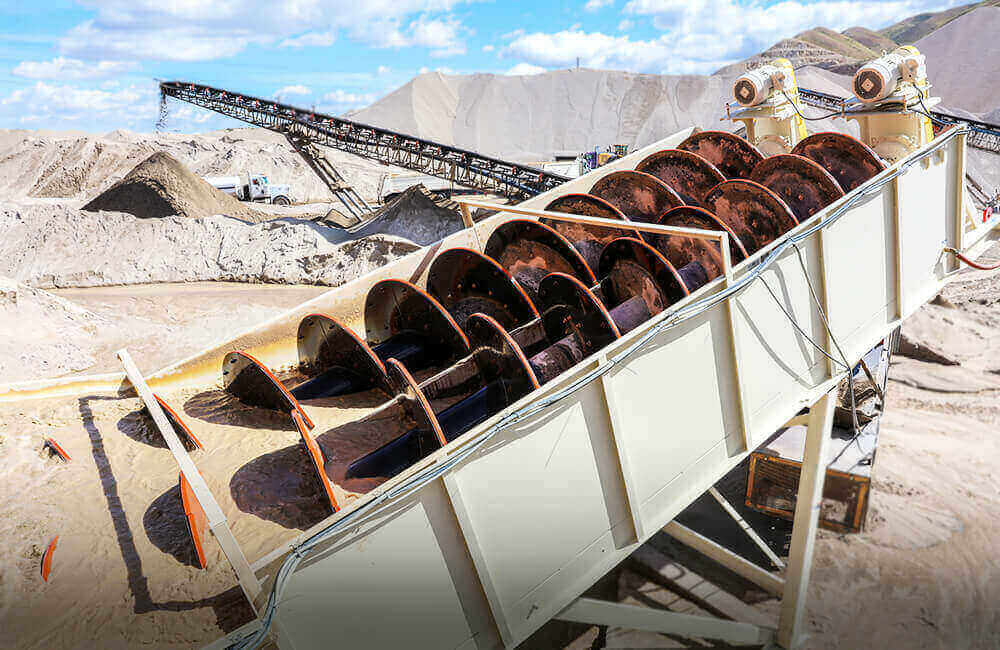
Spiral classifier and rod mill: Grinds the 0–6 mm tailings from the jig machine down to 0–2 mm and returns the material to the jig machine for tungsten concentration; tailings generated in this step are pumped back to the vibrating screen.
Three dry-type disc magnetic separators: Perform further separation and purification on the 0–2 mm tungsten concentrate from the jig machines and shaking tables. Stepwise separation using varying magnetic field strengths yields non-magnetic materials (gangue)—discarded as tailings; strongly magnetic materials (magnetic impurities)—set aside for separate treatment; and weakly magnetic materials (wolframite)—ultimately processed into high-grade tungsten concentrate.
Maximize the value extracted from wolframite
Wolframite processing solutions are an industrial process that removes gangue impurities from raw wolframite ore through physical beneficiation methods to obtain high-grade tungsten concentrate. Custom designs are developed based on the ore’s process mineralogy, ensuring the rational configuration of equipment for crushing, grinding, gravity separation, magnetic separation, and fine-slime treatment. JXSC provides comprehensive, one-stop custom services, ensuring that every production line achieves precise ore analysis, optimal process solutions, rational equipment configuration, and compliance with beneficiation performance targets.
“gravity-magnetic separation” combined process is suitable for the pre-concentration of conventional coarse-grained wolframite.
“gravity-flotation” combined process is suited for ores characterized by fine dissemination, complex mineral associations, or high sulfur content.
The ore properties, dissemination grain size, slime content, and associated mineral assemblages vary from one wolframite deposit to another. To provide you with design-accurate wolframite solutions quickly, please supply the following information:
Ore characteristics: Tungsten process type (wolframite/scheelite), grade, associated minerals, dissemination size, and slime content.
Production requirements: Daily processing capacity, target recovery rate, and budget range.
Site conditions: Power supply, water source, and site area constraints.
Environmental requirements: Tailings disposal method (dry stacking vs. wet discharge).
Ask us about mineral processing configuration and equipment quote! (No job, No investment)
Notice:
☑ We only provide mineral processing equipment and beneficiation solutions.
☒ We do not recruit, don’t offer jobs, no rental/ leases, and are not interested in investments or partnerships. Not buy and sell minerals/ ores/ materials.
● We value your privacy and keep your information safe.
Scroll to Top
Contact Us
Please fill in the mineral process solutions & equipment you need!
(No job, No work/Notbuy or sell minerals/ Noinvestment, cooperation)