Magnesite is a magnesium ore composed primarily of magnesium carbonate (MgCO₃). However, raw magnesite often contains impurities such as silicates, iron oxides, and calcium compounds, which adversely affect the final product’s refractoriness and chemical stability. Based on the differences in specific gravity, magnetic properties, or surface chemical properties between magnesite and gangue minerals, the key processes in magnesite beneficiation mainly involve washing, crushing, grinding, flotation, and magnetic separation to remove impurities (such as SiO₂, CaO, Fe₂O₃) from the ore and increase the MgO content to industrial-grade standards (usually ≥90%).
Processing Capacity: 10–500 TPH (customizable)
Process Flow: washing, screening, crushing, grinding, flotation, magnetic separation, and combined processes.
Silica gangue is naturally hydrophobic and easily carried to the surface by air bubbles; magnesite has strong ionic bonds and good hydrophilicity on its surface. By using collectors to selectively amplify this difference, the separation of silica from magnesite can be achieved.
Differences in Magnetic Susceptibility (Magnetic Separation):
Iron-bearing minerals exhibit ferromagnetic or paramagnetic properties, while magnesite is non-magnetic; therefore, iron and magnesium can be separated using high-intensity magnetic separation equipment.
Differences in Density and Thermally-Induced Hardness (Gravity/Thermal Separation):
After light calcination, the crystal structure of magnesite becomes porous and easy to grind into a fine powder, while silicate impurities tend to harden. This contrast allows for separation through a process of grinding followed by air classification.
Magnesite is a carbonate mineral. Because its density, magnetic properties, and floatability are very similar to those of dolomite and calcite, it constitutes a classic “difficult-to-separate” system. Its mineral processing follows a combined process of “desliming before separation, liberation before enrichment, reverse flotation before forward flotation, and flotation before magnetic separation” to purify low-grade, impurity-containing magnesite ore into high-grade magnesium concentrate. The specific beneficiation flowsheet for any given magnesite deposit must be determined through a comprehensive assessment of the ore’s mineral dissemination characteristics and the specific types of impurities present.
Magnesite Beneficiation Plant
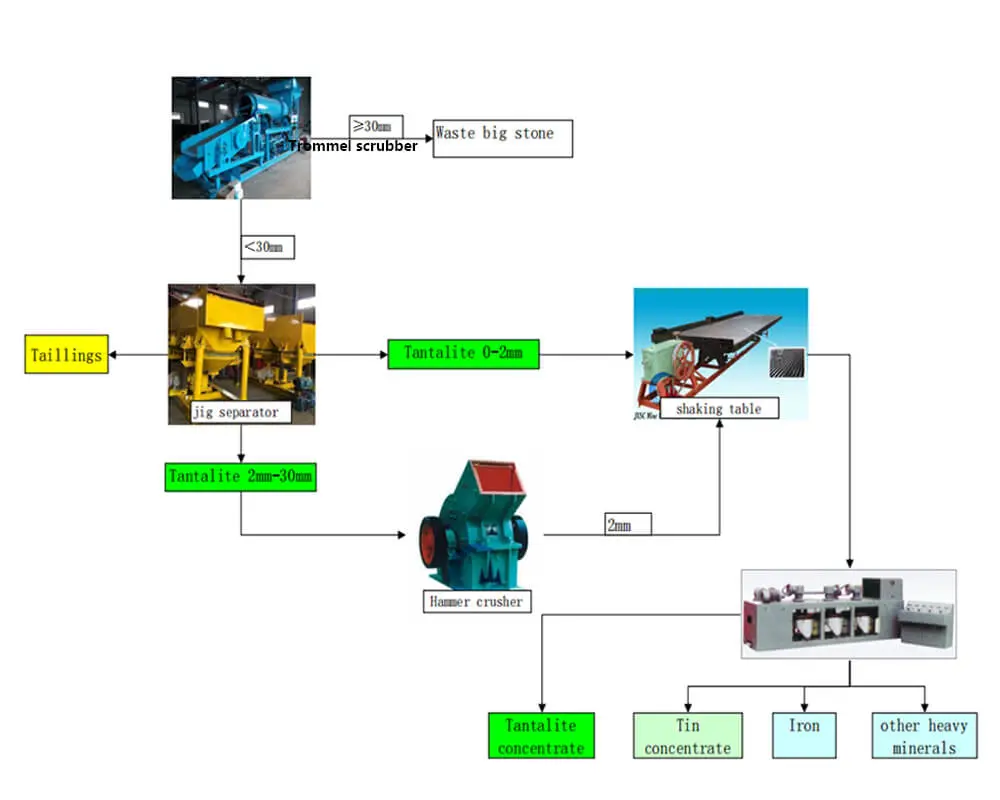
Standard magnesite processing flow
1. Ore Washing and Screening (Pre-desliming)
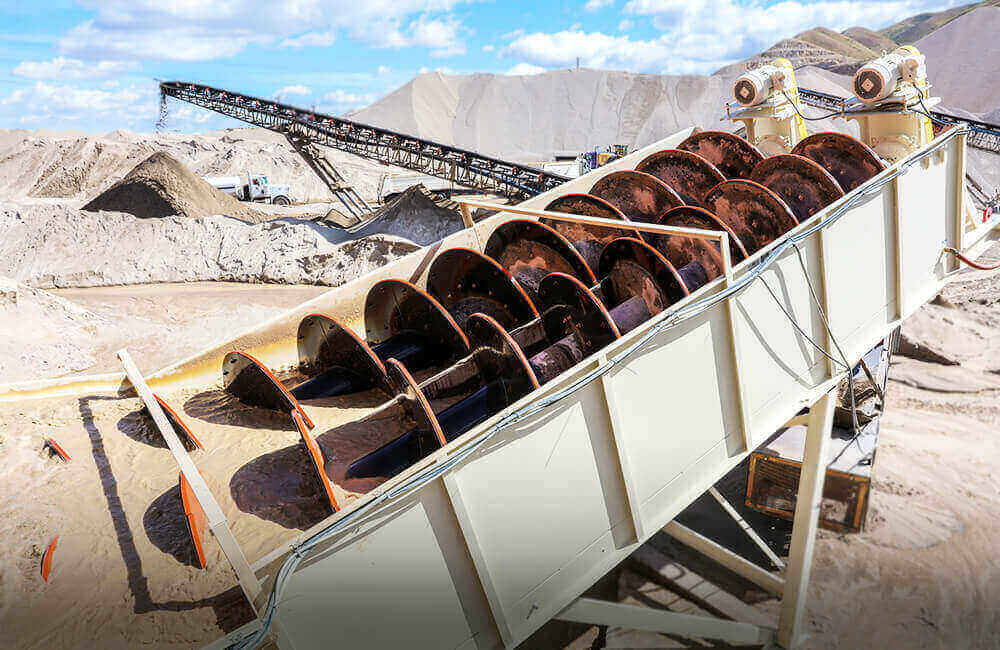
The raw ore is fed into a trommel screen, a rotary scrubber, a log washer, or a vibrating screen, where washing operations are employed to remove fine-grained, easily sludged material. This section not only removes mud but also pre-sorts minerals based on their coefficient of friction: minerals with a low coefficient of friction, such as talc, are easier to screen and can be removed before entering the main process. Simultaneously, large ore fragments undergo preliminary sizing, ensuring a stable feed for the subsequent crushing stage.
200TPH Magnesite Washing & Screening Plant
2. Crushing and Grinding (Liberation)
The raw ore is crushed to < 10 mm in a two-stage closed-circuit process consisting of a jaw crusher and a vibrating screen, and then ground in a closed-circuit process of a ball mill–spiral classifier to achieve liberation of the target mineral. The required grinding fineness is determined based on the results of process mineralogical analysis; if the grind is too coarse, liberation will be insufficient, whereas an excessively fine grind will lead to increased slime formation and higher reagent consumption.
3. Flotation Separation
Reverse Flotation for Desilication (Silicon–Magnesium Separation): Under neutral or weakly acidic conditions, cationic amine collectors are used to float off siliceous gangue, while the magnesite remains in the flotation cell. This process is primarily employed to remove silicon-bearing substances or quartz, balancing both product grade and recovery rate.
Direct Flotation for Calcium Reduction (Magnesium–Calcium Separation): Under strongly alkaline conditions, sodium oleate is used as a collector to preferentially concentrate magnesite, while depressants such as sodium silicate and sodium hexametaphosphate are employed to suppress dolomite and calcite. This process causes the magnesium-bearing minerals to float, while the calcium-bearing minerals sink. This stage addresses the issue of calcium-containing impurities and is the part of the process that requires the most precise control of the reagent regime.
4. Magnetic Separation (Iron Removal)
Medium-to-high-intensity magnetic separation or wet high-gradient magnetic separation is employed to remove iron-bearing minerals. For weakly magnetic iron minerals, magnetization roasting can be used to reduce hematite and limonite to magnetite for efficient removal. Performing magnetic separation after flotation prevents chemical reagents from interfering with separation precision.
5. Dewatering and Tailings Treatment
The concentrate is dried after being dewatered in two stages: a high-efficiency thickener and a filter press. Tailings are processed through a thickening and water-recovery system, enabling the recycling of process water, reducing fresh water consumption, and ensuring compliance with environmental regulations.
Optional Processes:
(1) Thermal Processing: Following calcination, the structure of magnesite becomes porous and easy to grind, whereas silicate impurities tend to harden. This process essentially relies on thermally induced differences in physical properties to achieve size-based classification, allowing for the selective comminution and separation of dolomite. It is particularly well-suited for high-silica ores.
(2) Photoelectric (Optical) Sorting: This method utilizes differences in color, luster, and reflectivity to pre-sort ore and discard tailings. It is applicable to coarse-grained material, enabling the removal of a portion of the gangue before the ore enters the grinding circuit, thereby reducing the feed volume and the subsequent processing load.
(3) Electrostatic separation: For ores with significant differences in critical potential between magnesite and calcite, talc, etc., effective separation can be achieved by adjusting the electric field parameters. This technique is suitable for deep purification, as well as for processing specific particle size fractions or minerals that are difficult to separate via conventional flotation.
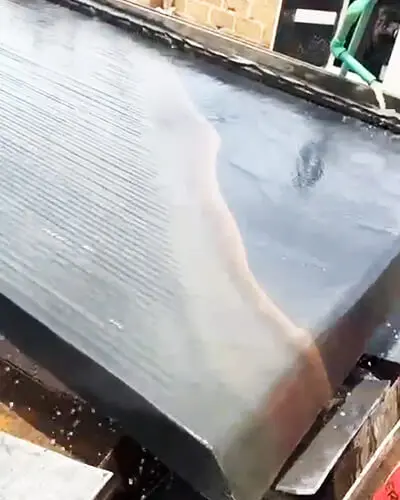
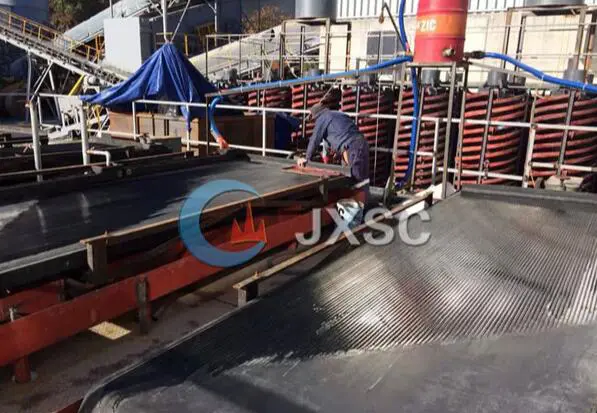
(4) Gravity Separation: Due to the insufficient density difference between magnesite and its primary gangue minerals (dolomite, calcite, and talc), gravity separation is inefficient and is generally not employed as a primary processing method. Gravity separation (jigging, shaking table) is only suitable for pre-tailing of coarse-grained disseminated ores and pre-selection of large ore blocks.
Maximize the purification of magnesite
JXSC provides standard magnesite mineral processing solutions, which primarily encompass washing and screening, crushing and grinding, reverse flotation, direct flotation, magnetic separation, dewatering, and tailings management. Depending on specific requirements, thermal sorting, optical sorting, and electrostatic separation can also be integrated as supplementary methods. The solution is applicable to the purification of crystalline ore, cryptocrystalline ore, high-silica type, high-calcium type, iron-containing type, and low-grade fine ore and tailings. We tailor production capacity, process flow, and equipment configurations based on the characteristics of the raw ore. Our solutions achieve recovery rates of 90%–95%, consistently upgrading the final concentrate to meet the standards required for refractory-grade applications.
Ask us about mineral processing configuration and equipment quote! (No job, No investment)
Notice:
☑ We only provide mineral processing equipment and beneficiation solutions.
☒ We do not recruit, don’t offer jobs, no rental/ leases, and are not interested in investments or partnerships. Not buy and sell minerals/ ores/ materials.
● We value your privacy and keep your information safe.
Scroll to Top
Contact Us
Please fill in the mineral process solutions & equipment you need!
(No job, No work/Notbuy or sell minerals/ Noinvestment, cooperation)